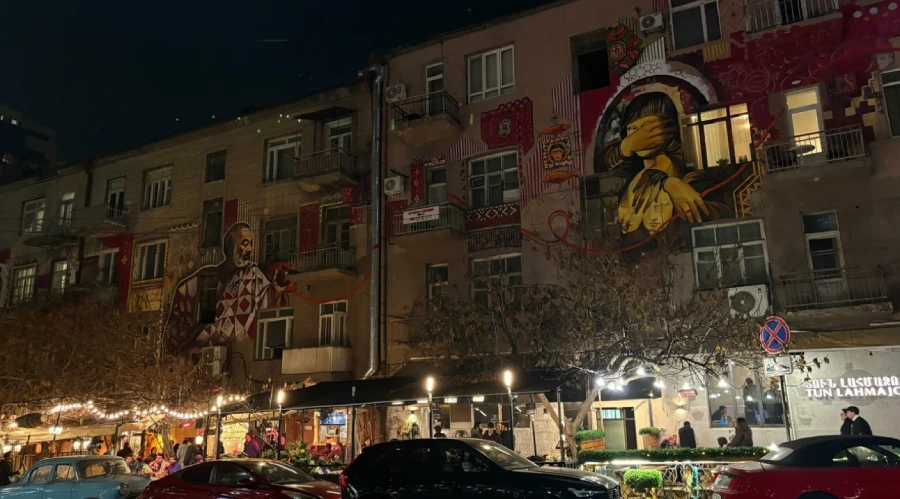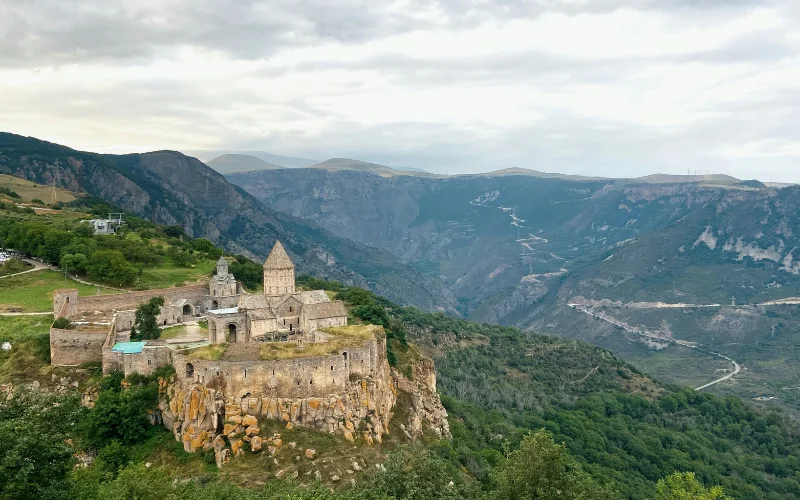
If Yerevan is Armenia’s pink heart, Gyumri is its black soul. Just a two-hour drive northwest of the capital, Armenia’s second-largest city has a texture and a temperament all its own, built from dark volcanic tuff, shaped by tragedy and resilience, and carried forward by generations of painters, poets, and craftspeople who never stopped creating. This is our complete guide to spending a day in Armenia’s cultural capital.
A City Built From Black Stone
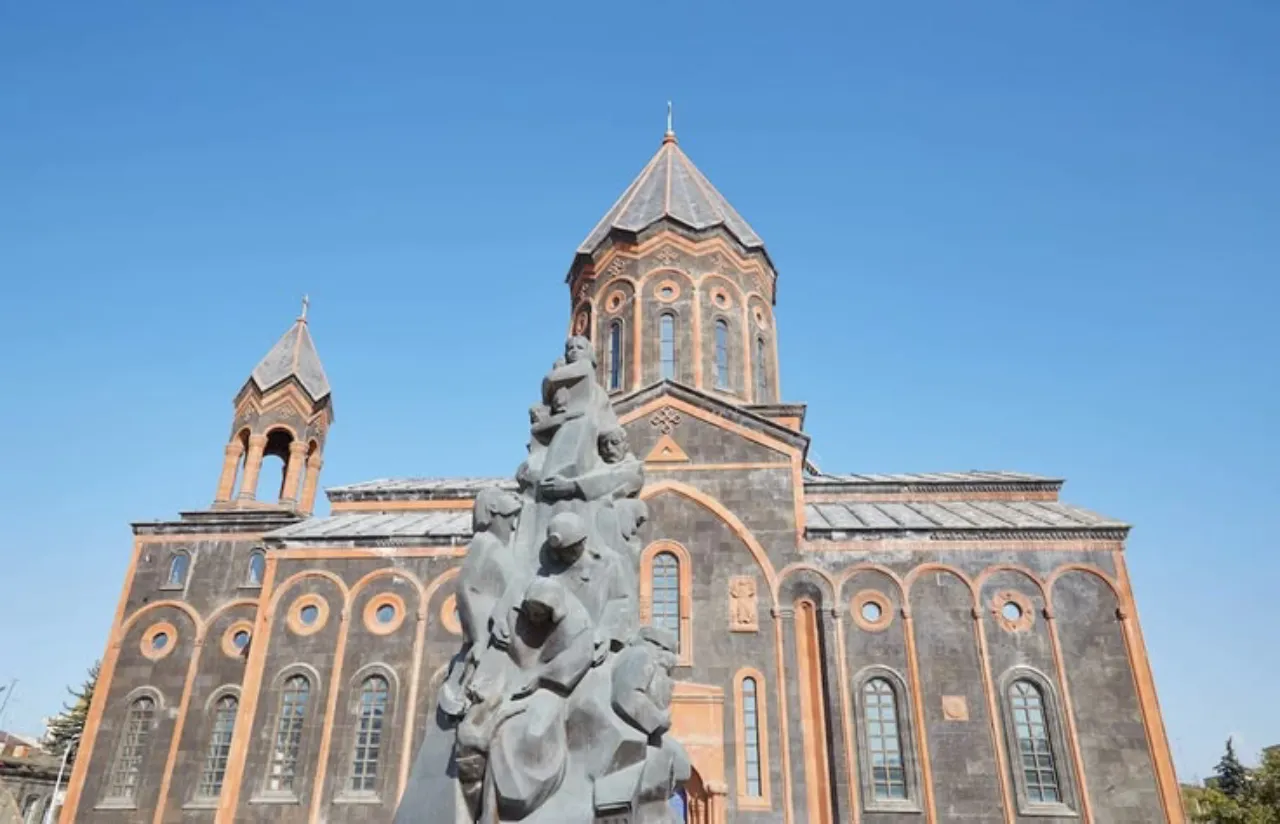
The first thing you notice in Gyumri is the color. Almost every building in the historic center, churches, mansions, municipal halls, is built from black volcanic tuff, often trimmed with warm orange-gold stone around the windows and doorways. It’s a combination you won’t see anywhere else in Armenia, and it gives the whole city a moody, painterly beauty, especially at golden hour.
Start your visit at Vartanants Square, the city’s central gathering point, then wander into the Kumayri Historic District, where 19th-century merchant houses with carved wooden balconies and wrought-iron gates still line the streets. Many were damaged in the devastating 1988 Spitak earthquake, and walking through Kumayri today is walking through a city that has spent decades rebuilding, with grit, humor, and an unmistakable pride in its own identity.
The Museums: Where Gyumri Shows Its Soul
Gyumri has an outsized number of museums and galleries for its size, and that’s no accident: this city has produced an extraordinary share of Armenia’s painters, sculptors, and performers.
- The Aslamazyan Sisters Gallery holds the world’s largest collection of work by painters Mariam and Eranuhi Aslamazyan, spanning painting, ceramics, and graphic art housed in a beautifully restored merchant mansion.
- Dzitoghtsyan House-Museum recreates 19th-century Gyumri domestic life and traditional crafts inside a preserved historic home, a great starting point for understanding the city’s artisan roots.
- The Hovhannes Shiraz House-Museum honors one of Armenia’s most beloved poets, with personal belongings and manuscripts on display.
Black Fortress and the View Over the City
Perched above Gyumri, the Black Fortress (Sev Ghul) was built in the 19th century as part of the Russian Empire’s border defenses and has since become a green, open-air cultural space with sweeping views across the city and toward Mount Aragats on a clear day. It’s an easy, atmospheric walk and one of the best spots to get your bearings before diving into the old town’s narrow streets.
Day Trips: Monasteries in the Shirak Hills
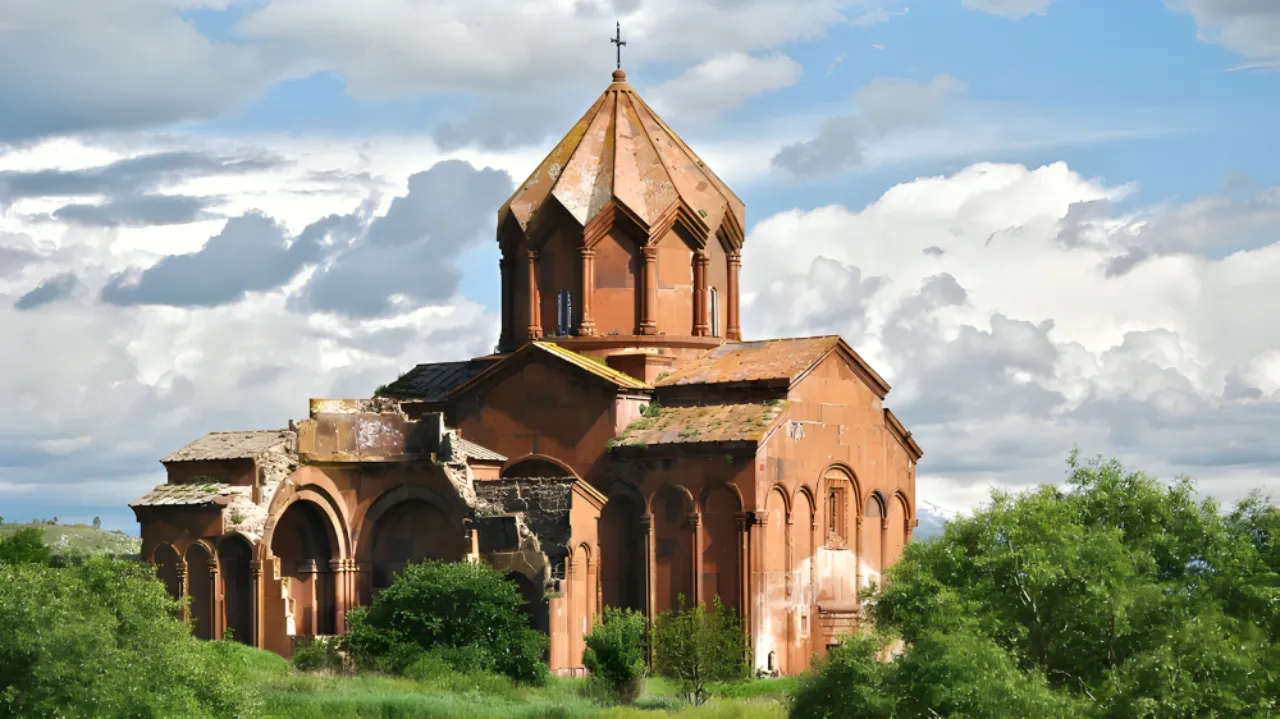
Gyumri makes an excellent base for exploring the surrounding countryside. Just outside the city, Marmashen Monastery sits in a quiet river gorge, its 10th-century domed churches largely untouched by crowds. A little further out, Harichavank Monastery combines medieval architecture with panoramic views of Mount Aragats. Both are easy half-day additions to a Gyumri itinerary and a peaceful contrast to the city’s busy streets.
The Artisan Heart of Gyumri: Meet Naro Dolls
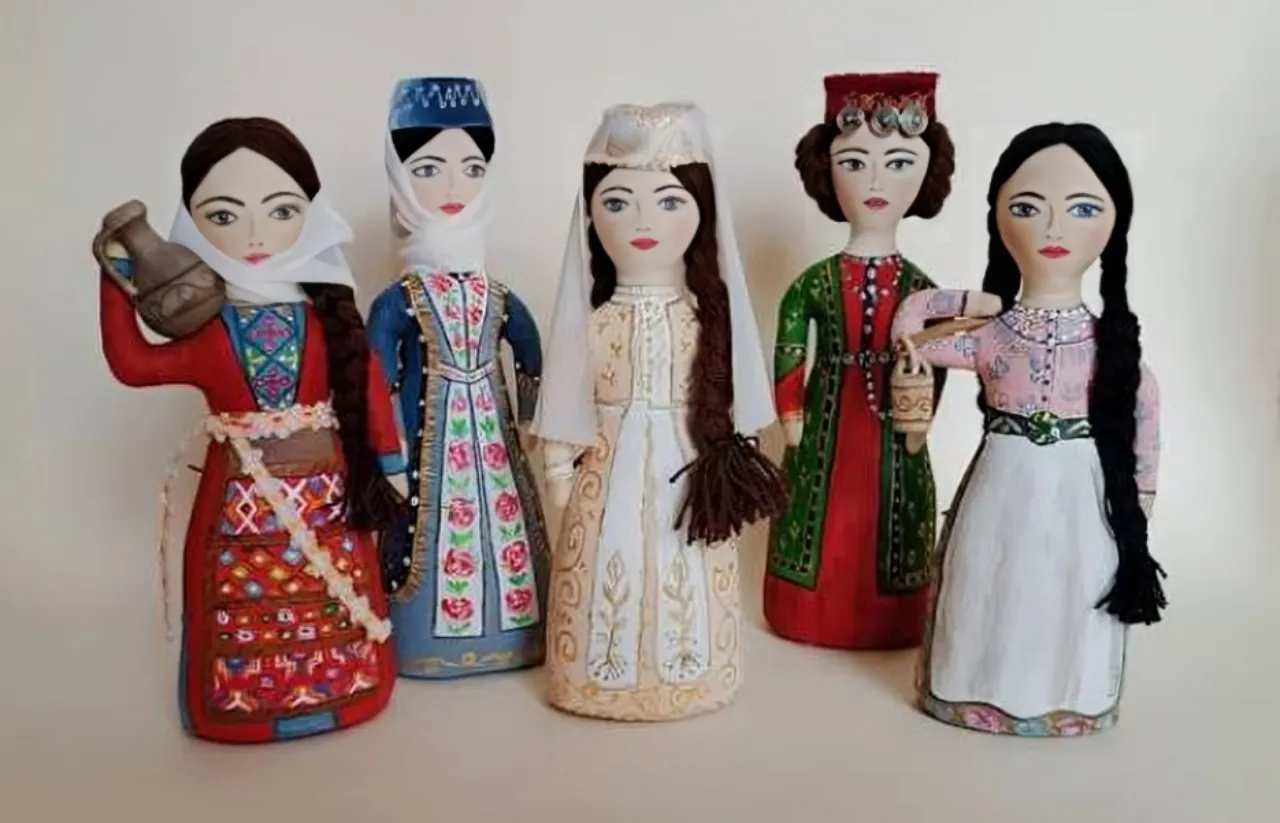
No visit to Gyumri is complete without spending time with the people keeping its craft traditions alive, and one of the most heartfelt examples of that is Naro Dolls, a small handmade doll atelier run by local artisan Narine Minasyan right here in Gyumri.
Each Naro doll is entirely handmade, from the sculpted face to the hand-sewn traditional Armenian dress, often inspired by regional costumes, folklore figures, and everyday scenes from Armenian life. Watching, or trying, this work firsthand is a window into the same spirit of patient, detail-obsessed craftsmanship that shaped Gyumri’s historic architecture and its generations of painters and sculptors. It’s the kind of hidden gem you won’t find in a typical guidebook: a small workshop where a single pair of hands turns fabric and thread into a character with real personality.
For travelers who love bringing home something with a story, a Naro doll makes a far more meaningful souvenir than anything mass-produced: a small, wearable piece of Gyumri itself.
Where to Eat and Drink
Gyumri’s food scene leans hearty and homestyle. Look for khashlama and kyufta, the city’s beloved meat dishes, and don’t skip panrkhash, a rich bread-and-cheese casserole that’s practically a Gyumri signature. For coffee and pastries, cafés around Vartanants Square and the Kumayri district serve excellent Italian-style coffee alongside Armenian sweets, a perfect way to warm up between museum stops, especially in the cooler months.
Planning Your Visit
Gyumri rewards travelers who slow down. A single day lets you cover the main square, one or two museums, and the Black Fortress, but two to three days give you room to add a monastery day trip, linger in an artisan workshop like Naro Dolls, and simply wander the black-stone streets without rushing. Whatever pace you choose, come with curiosity: this is a city that reveals itself slowly, through its stones, its stories, and the hands still shaping its traditions today.
Planning a trip to Gyumri or anywhere else in Armenia? Sara Voyage can help you build the perfect itinerary, reach out and let’s start planning.